The Installer Report
The Dealer Tint Receipt Should Name the Film
A candid installer discussion exposes a basic disclosure gap: customers may buy dealer-installed tint without knowing the manufacturer, series, shade, or warranty behind it.
By : Installer Report Desk
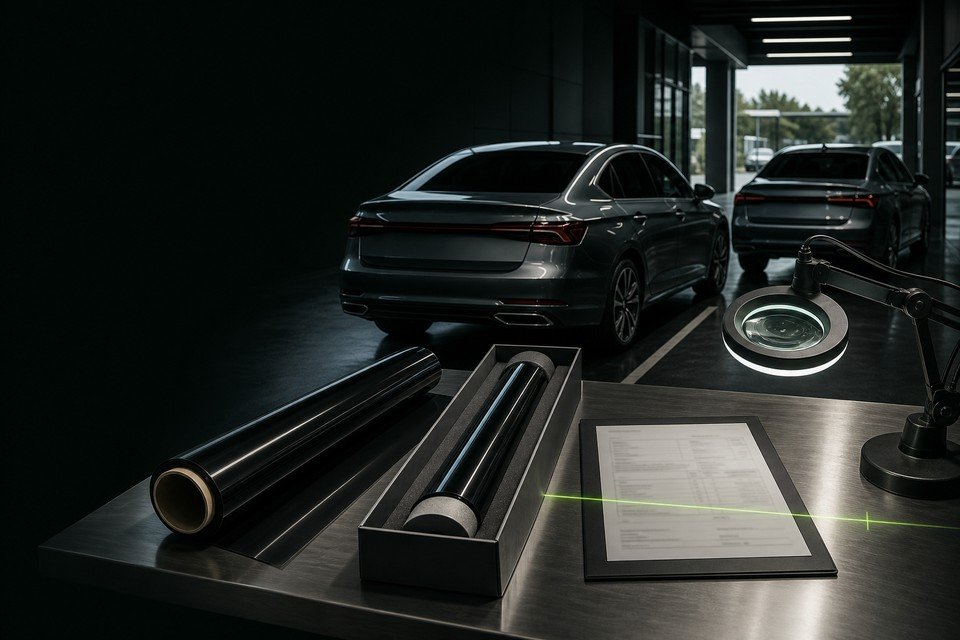
Illustration by Installer Report
The customer sees one line on the addendum: window tint.
That line can conceal almost everything that determines value - the manufacturer, product series, visible-light transmission, heat-rejection performance, installation source, and warranty remedy.
A public Facebook discussion in Window Tinting Business made the disclosure gap unusually visible. In a debate over lower-cost and premium film lines, one participant said a lower-cost product was used for dealership inventory while a different product was used for customers who paid the shop directly.
That is one person's anecdotal comment, not evidence of a universal dealership practice or a defect in any named product. But it raises a strong editorial question: why can the product identity disappear when tint is bundled into the car deal?
"Tint" is not a product specification
Customers buying tires receive a brand, model, size, and rating. Buyers selecting motor oil can identify the viscosity and specification. Tint is often sold with less detail even though product lines from the same manufacturer can carry different construction, performance, appearance, and warranty terms.
At minimum, a delivery document should state:
- Film manufacturer and exact series
- Nominal VLT or shade installed on each glazing position
- Installing company and installation date
- Warranty term, covered failure modes, and claim contact
- Confirmation that the chosen configuration complies with the applicable local law
Without those fields, the customer cannot easily compare the add-on, validate a warranty later, or tell a replacement installer what is already on the vehicle.
The incentive problem
Dealer work is a volume channel. Volume buyers negotiate price, turnaround, and rework exposure. That can produce legitimate, clearly disclosed packages at several quality tiers.
The problem is not that an economy film exists. The problem is when the buyer assumes a premium specification because the invoice never says otherwise.
A clean operating model separates three decisions:
| Decision | What should be disclosed | | --- | --- | | Product tier | Good / better / best, with exact series | | Performance | Manufacturer-published values for the selected film and glass context | | Warranty | Who owns inspection, removal, material, and reapplication labor |
The dealer, installer, and manufacturer should be able to point to the same answer.
Warranty language proves identity matters
Major manufacturers attach warranty rights to defined products, approved installation, and records.
For example, 3M's current automotive window-film warranty distinguishes covered series, requires the original consumer to retain documentation, and directs claims through the installer or 3M. LLumar's published product data shows that warranty duration can differ across automotive product series and markets.
If the receipt says only "tint," the documentation chain is already weak.
What responsible dealer programs look like
The strongest dealership-installation programs can turn transparency into an advantage:
- Put a film-series field in the deal jacket and digital vehicle record.
- Give the buyer the manufacturer's warranty card at delivery.
- Display a sample board with exact series and performance data.
- Offer upgrades before installation, not after the customer asks what was used.
- Identify the installing shop and the correction process.
- Photograph legal-compliance meter readings when required by shop policy or local law.
This protects the installer as much as the buyer. It stops a future shop from guessing at the product, keeps the dealership from promising remedies outside the manufacturer program, and makes legitimate tiering visible.
A disclosure standard the industry can adopt now
No new technology is required. Add five fields to every dealer tint invoice:
Manufacturer. Series. Shade. Installer. Warranty ID.
The sector should not rely on customers asking the perfect question after financing is signed. If the film is good enough to install, its identity is good enough to print.
Editorial status and source note
This is an editorial draft based on an anecdotal public discussion, not a finding about any dealer, installer, or film manufacturer. Social source: Window Tinting Business Facebook discussion, accessed August 4, 2026. Warranty references: 3M Automotive Window Film warranty and LLumar automotive film performance data.
Related reports
 TintLocal
New York’s 50% VLT Shift: What Tint Installers Need to Know
Assembly Bill A5306 would lower New York’s minimum light-transmittance standard from 70% to 50% on key side and rear glass — but it is not law yet, and DMV inspection guidance still reflects the 70% rule.
 TintGlobal
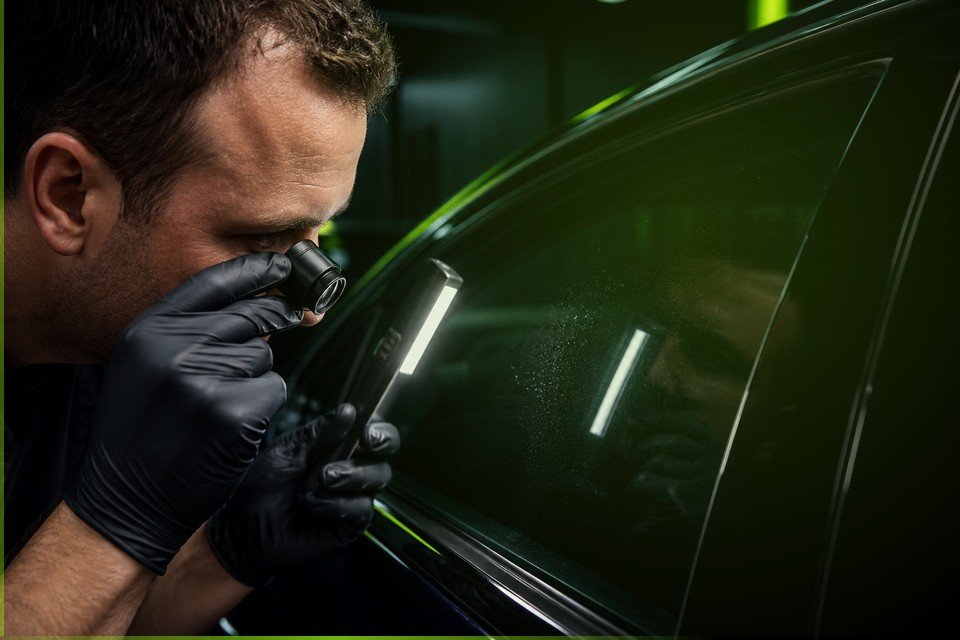
How Much Contamination Is Acceptable in a Window Tint Installation?
There is no universal particle-count spec — but the IWFA’s visual inspection guidelines define what ‘unobtrusive’ means. Here’s how shops should set customer expectations before TikTok becomes the judge.
 TintGlobal
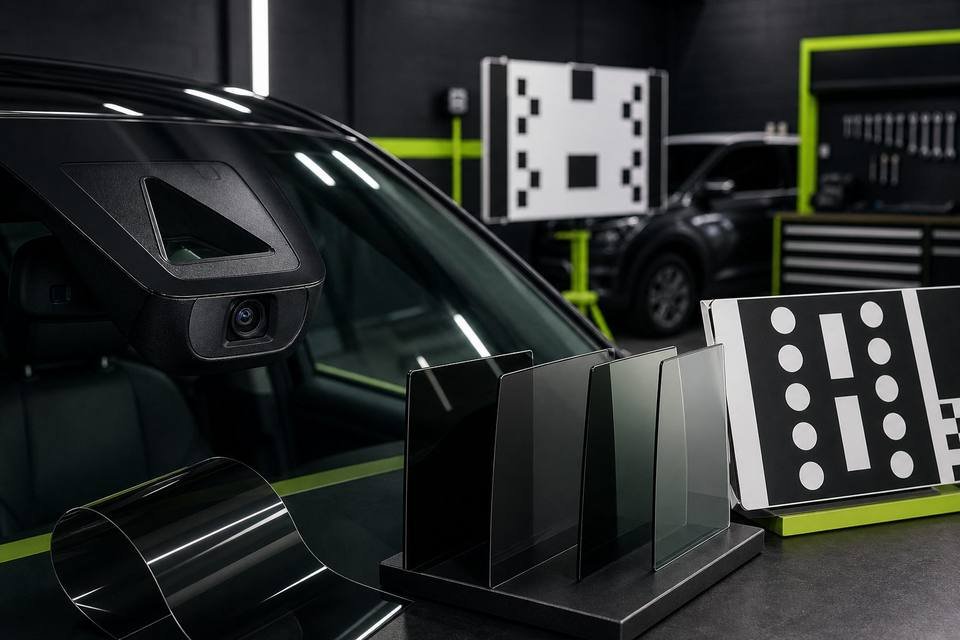
WFCT Meets Auto Glass Week: Why Tint Shops Can’t Ignore ADAS Anymore
Same San Antonio week, shared registration portal, overlapping skillsets. Ceramic non-metal film, camera zones, and calibration culture are colliding—here’s the operator checklist.
Get the weekly briefing operators actually read.