The Installer Report
Tint Notes: The Knowledge Hub Auto Restyling Needed
Install knowledge is revenue. Centralized notes reduce rework, accelerate training, and make multi-bay quality repeatable instead of heroic.
By : Eliza Muller
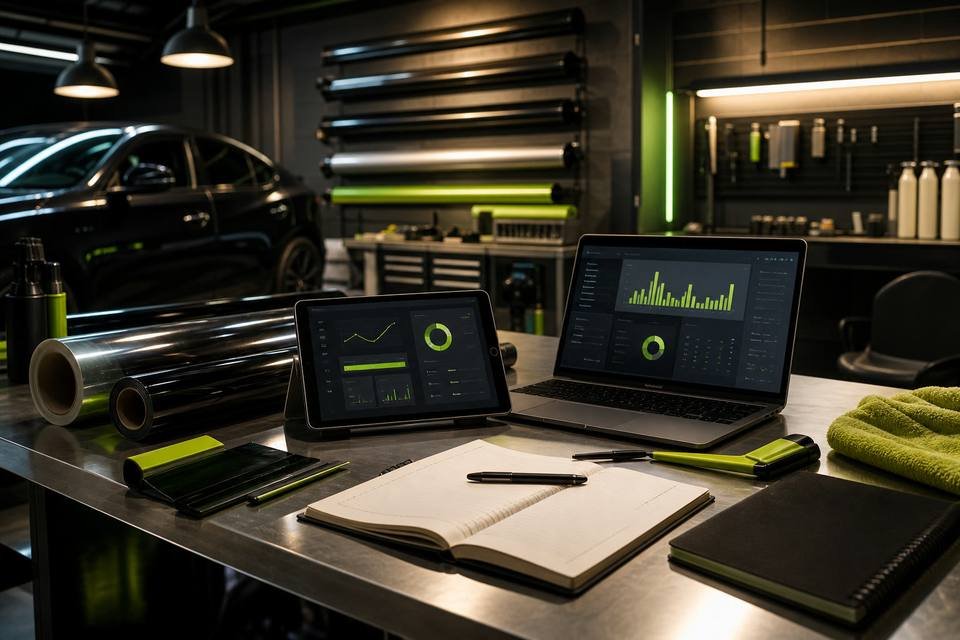
Illustration by Installer Report
Hook (hard, scroll-stopping)
Your most expensive tool isn’t film. It’s experience.
And most shops treat experience like it’s free—until a key installer leaves, a comeback hits at the worst time, or a junior tech repeats the same mistake on the same vehicle for the fifth time.
A centralized knowledge hub (the “Tint Notes” idea) matters because it turns tribal memory into a system. That is how you scale bays, locations, and quality without relying on one hero.
What’s happening
Restyling work is getting more complex:
- more vehicle quirks,
- more sensor/trim edge cases,
- more film tiers and finishes,
- more customer expectations driven by short-form content.
At the same time, shops are trying to operate more like businesses:
- higher throughput,
- better scheduling,
- fewer missed calls,
- more consistent delivery.
That combination makes one thing unavoidable: you need a memory system. A community driver platform can become that system by making it easy to capture and retrieve the notes that matter:
- vehicle-specific install quirks,
- film choice recommendations,
- edge strategies,
- time estimates that match reality,
- and “what went wrong last time.”
Why it matters (for installers)
1) Training speed without quality collapse
Most training fails because “good” is vague.
When you document what pass/fail looks like (with photos and notes), juniors learn faster and seniors spend less time repeating themselves. That increases capacity without lowering standards.
2) Fewer comebacks and less rework
Rework is a margin killer because it steals your most valuable resource: bay time.
If you can track patterns—contamination issues, edge lift hotspots, customer expectation failures—you can fix causes instead of eating symptoms.
3) Better sales-to-production handoff
Shops lose money in handoffs:
- sales promises something production can’t deliver quickly,
- production finds out too late,
- customer gets disappointed,
- shop discounts to “make it right.”
When notes and checklists are standardized, the handoff becomes part of the product.
4) A shop’s standards become portable
If you ever want to add bays or add locations, standards have to be portable. Documentation makes standards trainable and repeatable.
That’s operator-level leverage.
What to do this week (actionable)
1) Create your first 25 vehicle notes
Pick your top volume vehicles and write simple notes for each:
- glass quirks
- preferred film tier
- edge strategy
- time estimate
- failure risks
- one photo of the tricky area
Don’t overbuild. Start where you bleed time.
2) Build a “mistake library”
Create a simple taxonomy:
- contamination
- edge lift
- shrinking behavior
- sensor/ADAS considerations
- customer expectation mismatch
Then log examples. This turns mistakes into training assets instead of shame.
3) Add a one-minute job handoff checklist
Every job should have:
- vehicle details
- film tier
- special notes
- promised delivery window
If a platform enforces it, you reduce chaos. If humans enforce it, you need discipline.
4) Teach estimators one sentence that sells process
Use: “We’ve done this vehicle many times. We document install notes and QC steps for it. That’s how we protect your result.”
That sentence converts premium buyers because it signals professionalism without hype.
Documentation isn’t admin. It’s throughput and reputation protection.
Related reports
 Shops
ShopsWFCT’s Family Film Day Is a Labor Strategy Dressed as a Soft Feature
Saturday, Aug 29 lets kids onto the San Antonio floor for $10. Cute? Yes. Also the clearest public signal yet that shops are fighting a recruiting pipeline problem.
 Shops
ShopsThe Installer Shortage Nobody Wants to Talk About
Training pipelines are thin, expectations are high, and retention is a management problem disguised as a “labor market” problem.
 Shops
ShopsFrom Installer to Operator: The Business Shift Happening Now
The next generation of owners is not the best tinkerer in the shop—they are the person who can read a P&L, hire adults, and build systems.
Get the weekly briefing operators actually read.