The Installer Report
XPEL Is Quietly Building Control Over the Installer Network
The moat isn’t only film performance. It’s training, certification, warranty trust, and an installer flywheel that shapes what customers ask for and what shops confidently sell.
By : Jimmy Inke
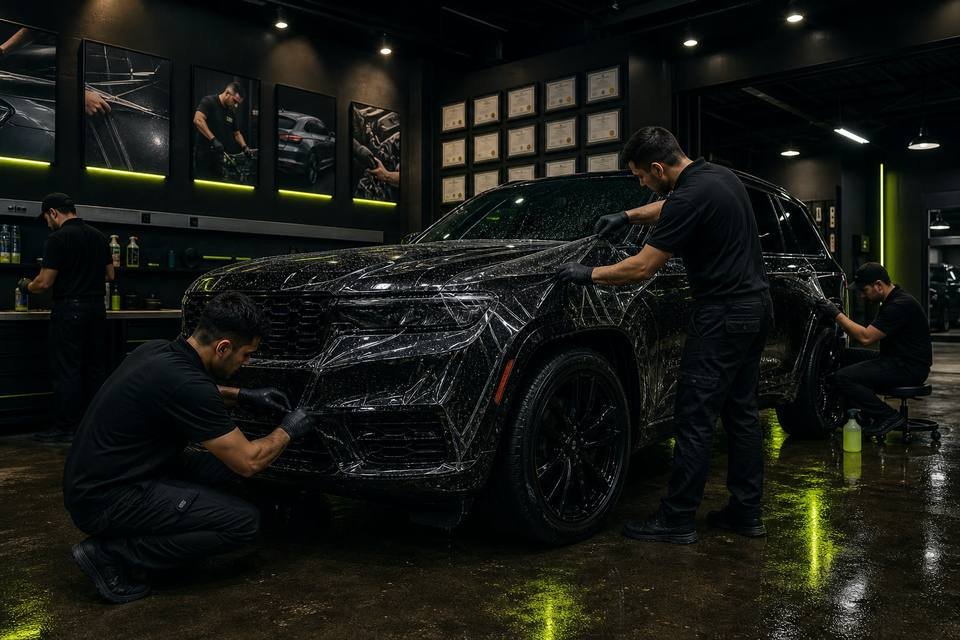
Illustration by Installer Report
Hook (hard, scroll-stopping)
If you think the competitive fight is “which film is best,” you’re playing a small game.
The big game is who owns the installer’s default recommendation—because the default recommendation becomes the customer’s “safe choice,” and the safe choice becomes the pricing floor in your market.
That’s why certain brands keep getting stronger even when competitors launch comparable products. The product matters, but the system around the product is what compounds: training pathways, certification signals, warranty confidence, and the way installers talk about risk when a customer is hesitant to spend real money.
What’s happening
In tint, PPF, wrap, coatings, and detailing, the customer is not buying “material.” The customer is buying regret reduction:
- “Will this fail?”
- “Will it look weird?”
- “Will I get stuck in a warranty fight?”
- “Will the shop ghost me if something goes wrong?”
The installer sits at the center of that decision. That installer:
- decides what gets recommended,
- decides what gets stocked,
- decides what gets defended at premium pricing,
- and decides what gets blamed when expectations aren’t met.
So when a brand builds mechanisms that strengthen installer confidence and customer trust, it’s effectively building distribution.
The most durable mechanisms are not flashy:
- Training and repeatable install standards that reduce failure and rework
- Certification that signals competence to the market
- Warranty framing that makes the purchase feel safe
- Partner ecosystems (dealers, high-end detailers, referral nodes) that route buyers to “approved” shops
- Content gravity that causes customers to ask for a brand by name
None of those require hype. They require consistency.
Why it matters (for installers)
1) The network sets your market’s pricing psychology
When your market has a strong “safe choice” narrative, premium packages feel normal. Customers come in expecting a serious ticket. That changes the entire sales conversation.
When your market doesn’t have that narrative, you live in commodity land: endless price comparisons, shallow trust, and customers who treat film as a coupon product. That’s not just annoying. It kills margins and burns out your best installers.
2) Certification becomes a filter for high-intent work
Whether certification is “fair” doesn’t matter nearly as much as whether it becomes a referral language.
If dealership partners, brokers, and premium clients use certification as shorthand for “safe,” non-certified shops can get excluded even if their work is excellent. In operator reality, markets often reward signaled competence, not only actual competence.
3) Warranty confidence improves close rate and reduces dispute load
Warranty isn’t only a policy. It’s a sales lever and a dispute lever.
When the warranty story is clear, customers feel safe spending more. When it’s messy, they get skeptical, delay decisions, and treat your shop like a risk.
From an installer point of view, warranty confidence also impacts behavior. Shops that believe they’re protected often enforce QC more consistently because they have a standard to meet. Shops that feel alone in disputes tend to “make it right” out of pocket, and that eats labor capacity.
4) Vendor dependence creates quiet risk
If your production depends on one ecosystem, you gain leverage and you accept fragility:
- If there’s a supply issue, your schedule eats it.
- If terms change, your margins eat it.
- If product positioning shifts, your sales scripts may need rewriting.
The operator move is to use ecosystems without becoming trapped by them.
What to do this week (actionable)
1) Audit your “default recommendation” talk track
Write down what your team says when a customer asks:
- “What film do you use?”
- “Is it worth it?”
- “What happens if something fails?”
If your script depends on brand authority, add a second layer of authority that you control:
- your QC steps,
- your warranty handling policy,
- your install standards,
- and the documented process that prevents comebacks.
The goal is simple: the brand supports you, but you still own trust.
2) Turn certification into a conversion asset (not a logo)
Make it practical:
- one sentence your estimator uses to explain why your process is stable,
- one slide or page that makes partners comfortable referring to you,
- one delivery walkthrough line that reduces anxiety.
Customers don’t care about your badge. They care about what the badge implies: fewer problems.
3) Build a vendor risk plan (even if you never switch)
Document:
- your film tier packages,
- your core install standards,
- and the minimum acceptable alternatives for shortages.
You’re not planning to abandon an ecosystem. You’re building operational maturity so you’re not fragile.
4) Train the sales conversation like you train installs
If your installers can execute but your sales conversation is sloppy, you lose margin.
Pick one high-friction topic (windshield tint, PPF coverage levels, ceramic tint pricing) and build:
- a one-page explainer,
- a 30-second script,
- and a FAQ list for objections.
That’s how you protect close rate without discounting.
Related reports
 Industry
Who’s Actually on the WFCT 2026 Floor: The Operator Guide to Sponsors and Booth Gravity
XPEL, Eastman, Avery, Solar Gard, Terminax, Tint Wiz, insurers, and a long Topaz wall—here’s how to walk the San Antonio floor with a buy list instead of a tote bag.
 Industry
XPEL’s San Antonio Fortress Story: Tariffs, Manufacturing, and Installer Gravity
Public-market chatter around tariff refunds and manufacturing buildouts keeps XPEL at the center of installer-network talk—just as WFCT lands in its backyard. What shops should watch.
 Industry
WFCT 2026: San Antonio Becomes the Industry’s Week of Record
The International Window Film Conference & Tint-Off™ lands Aug. 26–29 at the Henry B. González Convention Center—co-located with Auto Glass Week, packed with returning film/PPF sponsors, Tint-Offs, Hall of Fame inductions, and a first-ever Family Film Day. Here’s the operator field guide.
Get the weekly briefing operators actually read.